Hardwood Floor Refinishing in Los Angeles

Hardwood floor refinishing is one of the best ways to restore the appearance of worn, scratched, dull, or aging wood floors without replacing them completely. Refinishing removes or refreshes the worn surface and gives the floor a cleaner, smoother, more updated appearance.

Professional Hardwood Refinishing Services

Bring Back the Beauty of Your Existing Floors

Over time, hardwood can lose its original finish because of foot traffic, pets, furniture movement, sunlight, spills, and everyday use.

Our hardwood floor refinishing services can include sanding, dustless sanding, staining, sealing, polishing, screen-and-recoat work, and full restoration depending on the condition of the floor.

Whether you want to bring back the natural look of your existing hardwood or completely change the color and finish, professional refinishing can help extend the life of the floor and improve the appearance of the entire room.

  • Dustless sanding for a cleaner process
  • Natural or custom stain colors
  • Matte, satin, semi-gloss and high-gloss finishes
  • Screen-and-recoat and full restoration
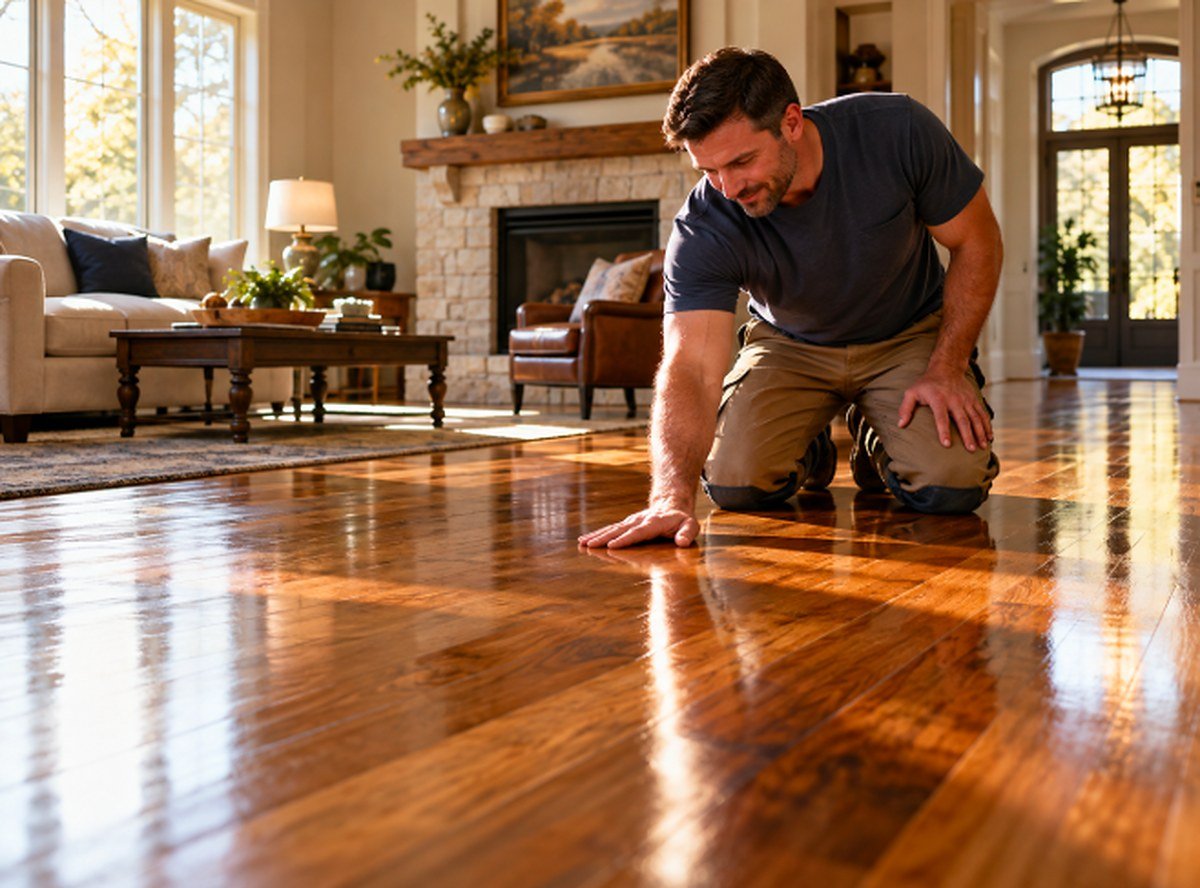
Freshly refinished glossy hardwood floor in a Los Angeles living room

Hardwood Floor Sanding

A Smooth Surface Ready for Stain or Finish

Sanding removes old finish, surface scratches, minor stains, uneven wear, and other imperfections from the top layer of the wood. The floor is typically sanded in stages using progressively finer abrasives to create a smooth surface.

Careful sanding is important because removing too much wood can damage the floor, especially on older floors or engineered products with thinner wear layers. After sanding, the hardwood can be stained or finished in its natural color.

Dustless Floor Sanding

A Cleaner Refinishing Process

Dustless sanding systems connect sanding equipment to specialized dust collection units that capture much of the debris as the floor is sanded.

While no sanding process is completely dust-free, dust-control equipment can make the project cleaner and reduce cleanup compared with traditional methods. It is especially popular in occupied homes, offices, and remodeling projects.

Hardwood Floor Staining & Color Options

Change or Enhance the Color of Your Floors

After the existing finish has been removed and the wood is properly prepared, stain can be applied to create a wide range of looks. Different wood species absorb stain differently, so sample testing is an important part of choosing the final color.

Natural tones
Light brown
Medium brown
Dark brown
Espresso
Gray
Warm honey
Whitewashed tones
Custom blended colors

Colors shown are approximate. We always test samples on your actual floor before choosing the final color.

01

Natural Hardwood Refinishing

Not every project requires stain. A clear finish highlights the original grain, color variation, and character of oak, maple, walnut, hickory, and other species.

Natural refinishing is especially popular with white oak and lighter floors for a clean, contemporary look.

02

Light Hardwood Refinishing

Light flooring is popular in modern, Scandinavian, coastal, and minimalist interiors. Options include natural white oak, pale oak, clear finishes, light beige stains, soft neutral tones, and whitewashed effects.

The final appearance depends heavily on the wood species.

03

Dark Hardwood Refinishing

Dark stains such as espresso, walnut, dark brown, and near-black tones create a dramatic, luxurious appearance.

Dark floors show dust and scratches more easily, so finish selection and maintenance should be considered first.

04

Gray Hardwood Refinishing

Gray stains create a contemporary look, but the result varies with the wood's natural undertones. Gray can look very different on red oak compared with white oak.

Testing several samples on the actual floor is the best way to evaluate the result.

05

Custom Hardwood Stain Colors

Custom blending mixes several stains to achieve a unique tone that complements cabinets, furniture, stairs, or other wood finishes.

Sample areas are prepared on the actual floor before selecting the final color.

06

Hardwood Floor Color Change

Refinishing is an opportunity to change the overall color. A light oak floor can be stained darker, and some darker floors can be refinished lighter, depending on the wood and previous finish.

Changing the stain color can dramatically update a room without replacing the hardwood.

Hardwood Floor Sealing & Finishes

Protection for Everyday Wear

A protective finish is applied after sanding and staining to help protect the wood from everyday wear. Floor finishes help create a barrier against dirt, minor spills, scratches, and normal foot traffic.

The appropriate finish depends on the type of hardwood, desired appearance, traffic level, and maintenance preference. Multiple coats may be required depending on the finishing system being used.

Water-Based Hardwood Finish

Water-based finishes dry relatively quickly and generally maintain a clearer appearance over the wood. They are often selected for light-colored flooring to preserve the natural tone, and are available in several sheen levels for residential and commercial floors.

Oil-Based Polyurethane

A traditional finish known for a rich, warm appearance that enhances the grain and deepens the wood's natural color. It generally requires more drying time between coats and works well with oak, walnut, cherry, and other hardwoods where a warmer tone is desired.

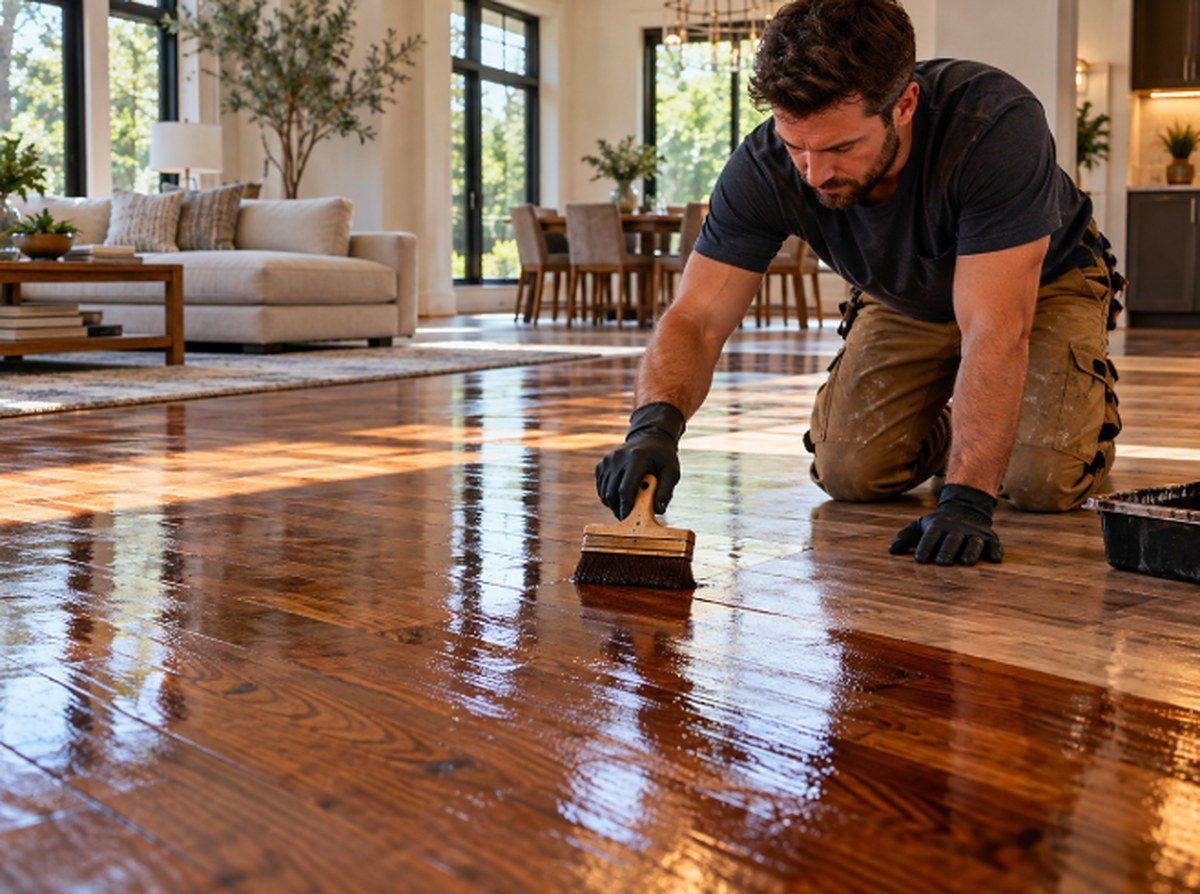
Applying a protective finish coat to a newly stained hardwood floor

Finish Sheen Levels

Matte

Low-sheen and natural-looking without strong reflection. Popular in modern homes, and helps make minor scratches, dust, and wear less noticeable.

Satin

One of the most popular finishes. A soft sheen that highlights the wood while keeping a natural look in traditional, modern, and luxury interiors.

Semi-Gloss

More reflection than satin for a polished, more formal appearance. Scratches, dust, and imperfections show more, so preparation is especially important.

High-Gloss

A very reflective, polished look for formal interiors, specialty installations, and certain commercial spaces. Requires more maintenance as marks are easier to see.

Screen & Recoat, Polishing & Restoration

From Light Refresh to Complete Restoration

Screen and Recoat

A screen-and-recoat refreshes hardwood without sanding down to bare wood. The existing finish is lightly abraded so a new coat can bond properly. It's useful when the floor has light surface wear but no deep scratches, major stains, or wood damage, and helps restore sheen and add protection.

Hardwood Floor Polishing

Polishing improves floors with minor dullness or light surface wear without removing the existing finish. It's a maintenance service for hardwood that's still in good condition, and it won't correct deep scratches, damaged finish, or exposed wood.

Hardwood Floor Restoration

Older floors often need more than basic refinishing. Restoration may include:

  • Board replacement
  • Gap repair
  • Nail repair
  • Squeak correction
  • Stain removal
  • Sanding
  • Color matching
  • Refinishing
  • Trim repair

The goal is to preserve as much original hardwood as possible while improving appearance and stability, which is ideal for older homes, historic properties, and floors with character. Damaged boards? See our wood floor repair service.

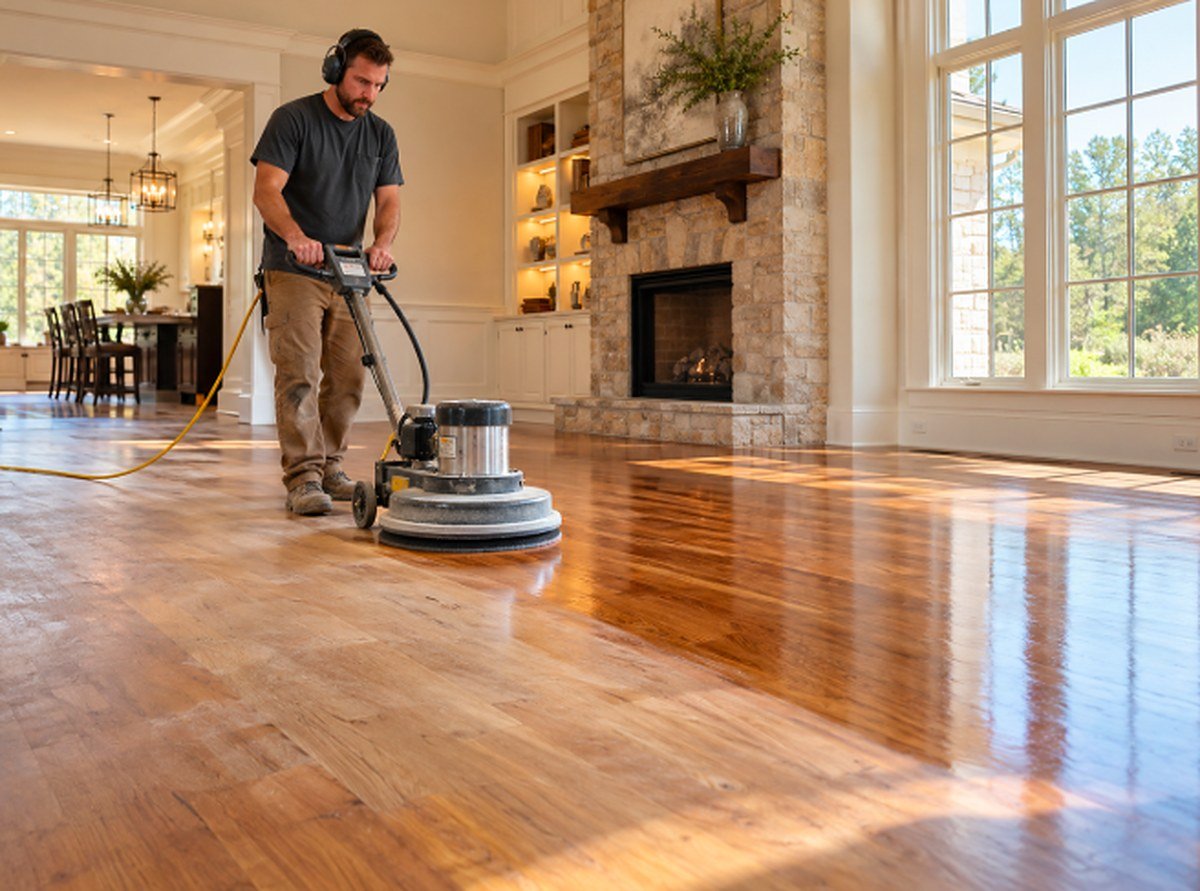
Technician buffing a hardwood floor during a screen and recoat

Refinishing by Wood Species

Every Hardwood Responds Differently to Sanding and Stain

Refinishing Oak Hardwood Floors

Oak is one of the most common species to refinish. Both red and white oak respond well to sanding and staining, and can be finished naturally or stained in a wide range of colors.

Its visible grain suits both traditional and modern refinishing projects.

Refinishing White Oak Floors

White oak is especially popular for natural, light, and neutral finishes, often with matte or satin sheens to highlight its subtle grain.

It can also be stained darker for a richer look, and is frequently refinished in updated interiors.

Refinishing Red Oak Floors

Red oak has warmer pink and reddish undertones. It can take medium or dark stains for a traditional look, or carefully chosen lighter colors for a more updated one.

Stain testing is especially useful because its undertones influence the final color.

Refinishing Maple Flooring

Maple is harder and denser than many species and absorbs stain differently than oak, so natural or lighter finishes are often used.

Proper preparation and application techniques help produce an even appearance when staining maple.

Refinishing Walnut Floors

Walnut has naturally rich brown coloring, so many walnut floors are refinished with clear or lightly tinted finishes to preserve it.

Dark stains can be used, but homeowners often prefer to let the wood's natural color show.

Refinishing Hickory Flooring

Hickory has strong grain patterns and significant natural variation, and refinishing brings out this character.

Because boards vary widely, the finished floor may display multiple tones even after staining.

What Refinishing Can Fix

Scratches, Stains, Sun Fading, Old Floors, and Stairs

01

Removing Scratches During Refinishing

Light and moderate scratches are often removed during sanding. Very deep scratches may remain visible or need board repair first, so the floor is inspected before work begins.

02

Removing Stains From Hardwood Floors

Surface stains from spills or wear may disappear once the old finish is removed. Deep water, pet, or chemical stains may need board replacement or a darker stain color.

03

Refinishing Sun-Faded Hardwood

Sunlight changes wood color, so areas under rugs or furniture may look different. Refinishing the whole room creates a more consistent look, though natural variation may remain.

04

Old Hardwood Floor Refinishing

Heavily worn older floors can often be restored. The floor's thickness and condition are inspected first, and floors sanded many times get a more conservative approach.

05

Refinishing Hardwood Stairs

Treads are sanded, old finish removed, stained, and coated to match surrounding floors, creating a consistent look between levels. Railings, risers, and trim can also be updated. See stair flooring.

06

Refinishing Floors After Carpet Removal

Older homes often hide hardwood under carpet. After removing carpet, padding, tack strips, and staples, sound hardwood can be sanded and refinished, with repairs where fasteners or stains caused damage.

Residential & Commercial Hardwood Refinishing

Single Rooms, Whole Homes, and Busy Businesses

01

Residential Hardwood Refinishing

Hardwood refinishing can be completed in many areas of the home:

Living roomsBedroomsDining roomsHallwaysKitchensHome officesEntrywaysStaircases

Multiple rooms can be refinished together for a consistent color and finish. See residential wood flooring.

02

Commercial Hardwood Refinishing

Commercial floors experience heavier traffic than residential flooring. Offices, restaurants, retail stores, studios, hotels, and other businesses may need refinishing when the surface becomes worn or dull.

Commercial projects may require durable finishes and careful scheduling to reduce disruption. See commercial wood flooring.

Can Engineered Hardwood Be Refinished?

Some engineered hardwood can be refinished, but not all products are suitable. The ability to sand engineered flooring depends on the thickness of the real wood wear layer.

Products with very thin veneers may only support light screening or no sanding at all. The floor should be inspected before refinishing to determine whether there is enough wood above the engineered core.

How Often Should Hardwood Floors Be Refinished?

There is no single schedule that works for every floor. The frequency depends on traffic, wood species, finish type, pets, maintenance habits, and the thickness of the hardwood.

Some floors may need only periodic recoating, while others may eventually require full sanding and refinishing. The condition of the finish is more important than the age of the floor.

Hardwood Floor Refinishing Process

A typical refinishing project may include the following steps. The exact process depends on the condition of the floor and the products being used.

  1. 01Inspecting the floor
  2. 02Completing necessary repairs
  3. 03Removing furniture and obstacles
  4. 04Sanding the old finish
  5. 05Edge and detail sanding
  6. 06Final surface preparation
  7. 07Applying stain if desired
  8. 08Allowing proper drying time
  9. 09Applying protective finish coats
  10. 10Completing a final inspection

Hardwood Floor Refinishing FAQs

Answers to Common Refinishing Questions

1.

How long does hardwood floor refinishing take?

Most refinishing projects take three to five days, depending on the size of the area, the repairs needed, whether stain is applied, and the finish system. Each coat needs time to dry before the next is applied. Water-based finishes usually dry faster than oil-based polyurethane. We give you a clear schedule, including when you can walk on the floor and move furniture back.

2.

Is dustless sanding really dust-free?

No sanding process is completely dust-free, but dustless systems make a big difference. Our sanders connect to specialized dust collection units that capture much of the debris as it's created. This keeps the air and your home much cleaner and reduces cleanup compared with traditional sanding, which is why it's popular for occupied homes, offices, and remodeling projects.

3.

Can I change the color of my hardwood floors?

Yes. Refinishing is a great opportunity to change color. Light oak can be stained darker, and some darker floors can be refinished lighter, depending on the wood species and previous finish. Because every species absorbs stain differently, we test several samples directly on your floor so you can see the real result before choosing the final color.

4.

What is the difference between refinishing and screen-and-recoat?

Full refinishing sands the floor down to bare wood, removing old finish, scratches, and minor stains before new stain and finish are applied. A screen-and-recoat only lightly abrades the existing finish and adds a fresh protective coat. It's faster and more affordable, but only works when the floor has light surface wear without deep scratches or damage.

5.

Which finish sheen is best for my floors?

Satin is the most popular choice because it balances a soft glow with a natural look. Matte is ideal for modern homes and hides minor scratches and dust well, making it great for kids and pets. Semi-gloss and high-gloss create a more polished, formal appearance but show marks more easily and need more maintenance. We can help you choose based on your lifestyle.

Restore the Beauty of Your Hardwood Floors

Refinish Instead of Replace

Worn or scratched hardwood does not always need to be replaced. Refinishing can restore the natural character of the wood, update its color, and give the room a cleaner and more polished appearance.

Whether your floors need sanding, staining, sealing, a screen-and-recoat, or complete restoration, the right refinishing process can help extend their useful life and transform the appearance of your property.

Contact us to schedule a hardwood floor evaluation, compare stain and finish options, and request an estimate for your refinishing project.

Book Service

Get a Free Estimate for Your Wood Flooring Project