Residential Wood Flooring in Los Angeles

Wood flooring is one of the most popular ways to add warmth, character, and long-term appeal to a home. From classic oak and rich walnut to wide-plank white oak and engineered hardwood, residential flooring can be tailored to your layout, style, budget, and lifestyle.

Complete Residential Wood Flooring Services

One Room or the Entire Home

Our residential wood flooring services include installation, replacement, repair, refinishing, staining, stair flooring, subfloor preparation, and custom decorative work. Whether you are updating one room or planning flooring throughout an entire home, careful material selection and installation help create a consistent, polished result.

We work with homeowners, property managers, builders, and remodeling professionals to plan flooring around the specific conditions of each property.

  • Single-family homes, condos, apartments, and townhouses
  • Luxury, custom, historic, and new construction homes
  • Rental and investment properties
  • Every room, from kitchens to staircases
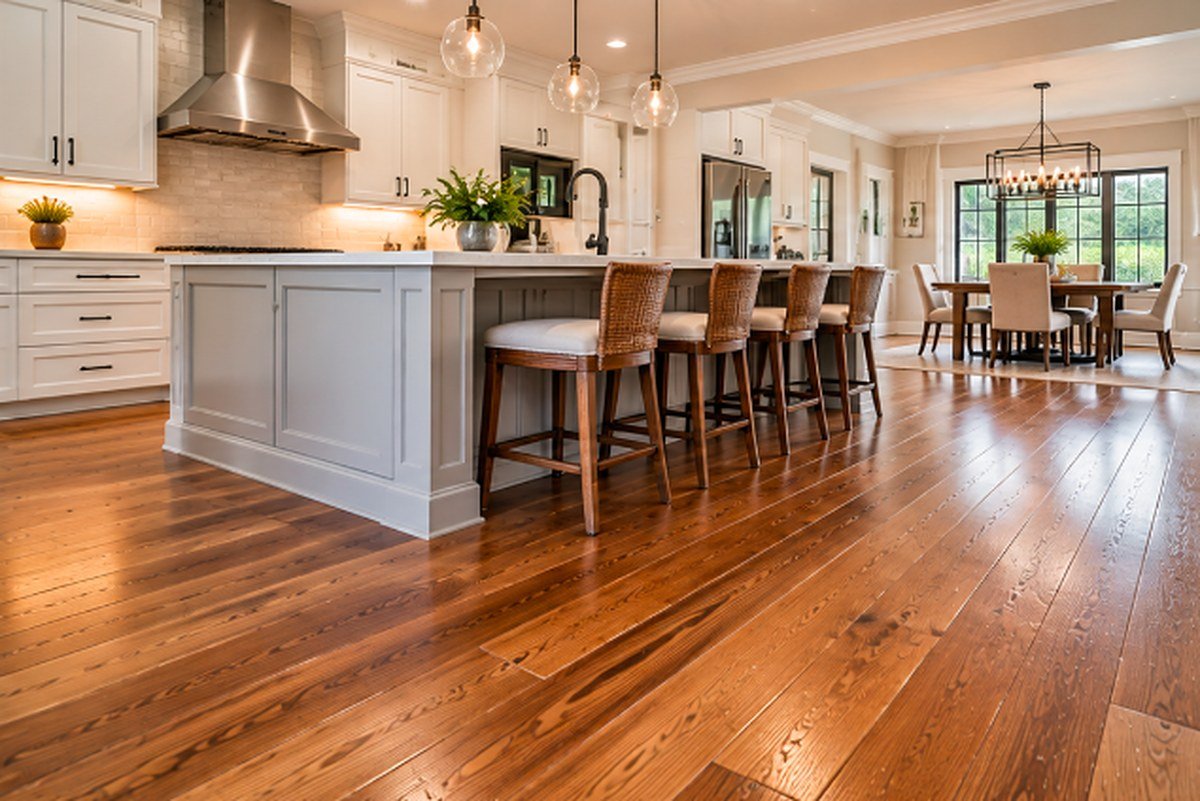
Open kitchen and dining area with warm wide plank hardwood flooring

Wood Flooring for Every Type of Home

Houses, Condos, Apartments, Luxury, Historic, and Investment Properties

01

Single-Family Home Flooring

Single-family homes offer the most design flexibility, with one style throughout or different species, widths, and patterns in selected rooms. Popular options include:

  • White oak
  • Red oak
  • Maple
  • Walnut
  • Hickory
  • Engineered hardwood
  • Wide plank
  • Herringbone
  • Matte finishes
  • Custom stains
02

Condo Hardwood Flooring

Condo projects often face HOA rules on sound control, installation methods, working hours, and approved materials. Engineered hardwood is frequently used with floating or glue-down systems.

Some buildings require acoustic underlayment or specific sound ratings, so building rules, floor height, transitions, and door clearance are reviewed first.

03

Apartment Wood Flooring

Wood gives apartments a cleaner, more upscale look. Owners often choose engineered hardwood for its flexibility and wide range of finishes.

With frequent tenant turnover, durability matters, and oak, engineered wood, matte finishes, and medium tones help disguise everyday wear.

04

Townhouse Hardwood Flooring

Townhouses often include multiple levels, staircases, hallways, and open living areas, so coordinated hardwood creates a consistent design from floor to floor.

Stair treads, landings, transitions, and flooring direction are planned carefully, using engineered or solid hardwood depending on the subfloor.

05

Luxury Home Hardwood Flooring

Luxury homes use wood flooring as a design feature, coordinated with cabinetry, stairs, built-ins, and architectural details:

  • Wide plank white oak
  • European oak
  • Walnut
  • Chevron
  • Herringbone
  • Versailles
  • Custom borders
  • Inlays
  • Medallions
  • Low-sheen finishes
06

Older Home Wood Flooring

Original hardwood may be hidden under carpet or vinyl and can often be repaired and refinished. Older properties may also have:

  • Uneven subfloors
  • Squeaks
  • Narrow plank hardwood
  • Previous patches
  • Water damage
  • Multiple layers
  • Unusual dimensions
07

Historic Home Hardwood Restoration

Original hardwood contributes to a historic home's character, and restoration preserves it whenever practical. Work may include:

  • Board repair
  • Reclaimed wood
  • Gap repair
  • Gentle sanding
  • Refinishing
  • Stain matching
  • Nail repair
  • Custom milling
08

Rental Property Flooring

Rentals need flooring that balances appearance, durability, cost, and maintenance between tenants. Engineered hardwood is a useful option for many rentals.

Medium tones, natural grain, and matte or satin finishes reduce the visibility of minor wear compared with dark or high-gloss floors.

09

Investment Property Flooring

Replacing damaged carpet or outdated floors with wood creates a cleaner, more updated interior. Decisions often focus on:

  • Durability
  • Installation cost
  • Maintenance
  • Neutral design
  • Availability
  • Installation speed
  • Long-term look

The best option depends on whether you'll rent, sell, or hold long term.

10

New Construction Hardwood Flooring

New builds let you coordinate species, plank width, stain, cabinets, countertops, walls, doors, and trim before installation.

Careful moisture control is essential, since subfloors may hold moisture from weather or construction, and the structure must reach proper conditions first.

11

Custom Home Flooring

Custom homes allow flooring tailored to the architecture, centered on sight lines, entries, fireplaces, islands, or staircases, with options like:

  • Extra-wide planks
  • Long lengths
  • Custom stains
  • Herringbone
  • Chevron
  • Decorative borders
  • Hardwood stairs
  • Custom vents
  • Matching trim
12

Whole-House Wood Flooring

Hardwood throughout the home creates a unified design, connecting:

  • Living rooms
  • Kitchens
  • Dining rooms
  • Bedrooms
  • Hallways
  • Offices
  • Entryways
  • Stair landings

Floor direction, expansion, transitions, and different subfloor conditions are planned throughout the property.

Wood Flooring Room by Room

From Living Rooms and Kitchens to Stairs and Basements

Living Room Flooring

Often the visual center of the home. Wide plank oak, walnut, hickory, and engineered hardwood are popular, and area rugs add comfort while herringbone can turn the floor into a design feature.

Bedroom Wood Flooring

Light oak, maple, natural finishes, and warm medium tones create a clean, comfortable look that pairs well with rugs, and matching bedrooms and hallways keeps upper levels consistent.

Kitchen Hardwood Flooring

Wood connects kitchens with living and dining areas. Because of spills and appliance leaks, material selection matters, with engineered or solid wood chosen for the space and spills cleaned promptly.

Dining Room Flooring

Straight plank oak gives a classic look, while parquet or herringbone feels more formal. The floor is chosen with chair movement and frequent foot traffic in mind.

Entryway Flooring

Entryways see dirt, shoes, and traffic, so durable finishes and easy-care species help. Herringbone, borders, and medallions make the entry more distinctive.

Hallway Hardwood Flooring

Hallways see some of the highest traffic in a home. Durable flooring and protective finishes maintain their look, and plank direction affects how long or wide they feel.

Home Office Flooring

Oak, walnut, and engineered hardwood create a polished, professional look with desks, built-ins, and office furniture, with protective pads under rolling chairs to reduce wear.

Residential Stair Flooring

New treads, risers, nosing, landings, staining, and refinishing coordinate the stairs with each level for a continuous look. See stair flooring.

Basement Residential Wood Flooring

Basements need extra moisture consideration. Engineered hardwood is often better below grade, with concrete moisture testing and the right underlayment or vapor control.

Flooring for Your Lifestyle

Families, Pets, Children, Busy Homes, and Open Layouts

01

Hardwood Flooring for Families

Busy households need flooring that handles regular traffic. Oak, hickory, and certain engineered products work well in active homes.

Matte or satin finishes make everyday scratches and dust less visible, and regular cleaning and furniture pads help preserve the floor.

02

Hardwood Flooring for Homes With Pets

No real wood floor is scratch-proof, but some choices make normal wear less noticeable:

  • Harder species
  • Wire-brushed surfaces
  • Matte finishes
  • Medium colors
  • Visible natural grain

Trimmed pet nails and quick spill cleanup also help.

03

Wood Flooring for Children's Rooms

Wood creates a clean, versatile surface in bedrooms and play areas, with area rugs adding softness where needed.

Durable finish selection is especially important in spaces with toys, furniture movement, and frequent activity.

04

Wood Flooring for High-Traffic Homes

Active households benefit from durable species and finishes, with particular attention to entryways, hallways, kitchens, and family rooms.

Floor mats, furniture pads, maintenance, and periodic recoating help protect heavily used areas.

05

Wood Flooring for Open-Concept Homes

Running the same hardwood through the kitchen, dining room, and living area visually connects the spaces.

Wide planks are popular because they create fewer seams across large rooms, with plank direction planned around the architecture and sight lines.

06

Wood Flooring for Minimalist Interiors

Minimalist homes benefit from simple grain, neutral colors, and low-sheen finishes.

Wide plank white oak and maple create a clean background for simple furniture and architecture.

Wood Flooring for Every Home Style

Modern, Traditional, Farmhouse, Coastal, and Minimalist

Wood Flooring for Modern Homes

Modern residential flooring often uses:

  • White oak
  • Wide planks
  • Natural finishes
  • Matte surfaces
  • Light neutral stains
  • Herringbone
  • Chevron

Simple trim and low-profile transitions maintain a clean design.

Wood Flooring for Traditional Homes

Traditional interiors often feature:

  • Red oak
  • Warm brown stains
  • Medium plank widths
  • Satin finishes
  • Detailed staircases
  • Decorative trim

These pair well with traditional cabinetry, fireplaces, and molding.

Wood Flooring for Farmhouse Homes

Farmhouse flooring may use wide plank oak, hickory, reclaimed wood, or distressed surfaces, where natural grain and variation are part of the look.

Mixed-width and hand-scraped floors create a more rustic feel.

Wood Flooring for Coastal Homes

Coastal interiors use light, neutral tones such as natural white oak, pale engineered wood, and matte finishes for a bright, relaxed look.

Moisture and humidity are considered when choosing flooring near coastal environments.

Wood Flooring for Luxury Interiors

Premium materials and detailed installation, such as wide plank white oak, walnut, and herringbone, chevron, or Versailles patterns.

Layouts can be designed around the architecture of the property.

Wood Flooring for Transitional Homes

Blending modern and traditional, transitional homes often use medium-tone oak, warm or neutral stains, and satin or matte finishes.

Wide planks with simple trim keep the look balanced and timeless.

Replacing, Matching & Restoring Floors

Carpet and Tile Replacement, Remodels, Repairs, and Refinishing

01

Replacing Carpet With Hardwood

After carpet removal, the subfloor is inspected for damage, staples, squeaks, and unevenness, then new hardwood is installed using the right method. See floor replacement.

02

Replacing Tile With Hardwood

Tile removal can expose mortar, backer board, and uneven conditions that need preparation, and floor height differences between rooms are addressed during planning.

03

Matching New Hardwood to Existing Floors

Additions and remodels often need new flooring to match existing hardwood by species, width, thickness, grade, stain, finish, and age. Refinishing old and new sections together can improve consistency.

04

Hardwood Flooring During Home Remodeling

Kitchen renovations, wall removal, cabinet replacement, and additions affect the floor layout. Planning flooring early reduces unnecessary transitions and mismatched sections.

05

Residential Wood Floor Repair

Localized damage such as scratches, water damage, loose boards, cracks, squeaks, gaps, and pet damage can often be repaired without replacing the entire room.

06

Residential Hardwood Refinishing

Refinishing restores dull, scratched, or worn hardwood with sanding, staining, and new protective finish, and can change the floor color during a remodel.

Choosing Residential Wood Flooring

The best flooring depends on several factors:

  • Home style
  • Room use
  • Subfloor type
  • Moisture conditions
  • Household traffic
  • Pets
  • Desired color
  • Plank width
  • Maintenance expectations
  • Budget

Comparing these factors can help identify materials that fit both the design and practical needs of the home.

Residential Wood Flooring Installation Process

A typical residential project may include the following steps. The exact process depends on the material and property.

  1. 01Measuring the rooms
  2. 02Evaluating existing flooring
  3. 03Inspecting the subfloor
  4. 04Testing moisture when appropriate
  5. 05Removing old flooring
  6. 06Repairing and preparing the base
  7. 07Acclimating materials when required
  8. 08Planning plank direction
  9. 09Installing the flooring
  10. 10Completing stairs and transitions
  11. 11Installing trim
  12. 12Final inspection and cleanup

Residential Wood Flooring FAQs

Answers to Common Homeowner Questions

1.

Should I choose solid hardwood or engineered wood for my home?

Both are real wood. Solid hardwood is ideal over wood subfloors and can be refinished many times. Engineered wood has a real wood top layer over a stable core, so it handles humidity changes better and works well over concrete, which is common in Los Angeles homes and condos. We recommend the best option for each room after checking your subfloor.

2.

How much does residential wood flooring cost in Los Angeles?

Most residential installations range from about $6 to $14 per square foot, including materials and labor. Engineered wood is often on the lower end, while solid hardwood, wide planks, exotic species, and decorative patterns cost more. Removal of old flooring, subfloor repairs, stairs, and trim also affect the total. We provide a free, detailed written estimate before any work begins.

3.

Can you install hardwood flooring in a condo?

Yes. We regularly install wood flooring in condos. Many buildings have HOA rules on sound ratings, approved underlayments, installation methods, and working hours, so we review your building's requirements before ordering materials. Engineered hardwood with an approved acoustic underlayment, installed as a floating or glue-down floor, is often the best fit for condo projects.

4.

Is wood flooring a good choice for rental properties?

Yes, wood can make rentals look cleaner and more upscale, and it's easier to maintain between tenants than carpet. Engineered hardwood in medium tones with a matte or satin finish is a popular choice, because it hides everyday wear and minor scratches better than dark or glossy floors. We help landlords balance durability, cost, and installation speed.

5.

Can you restore the original hardwood floors in my older home?

Often, yes. Original hardwood hidden under carpet or vinyl can frequently be repaired and refinished rather than replaced. We inspect the floor's thickness, condition, and subfloor, then repair damaged boards, fix gaps and squeaks, and sand and refinish carefully. For historic homes, we can use reclaimed wood or custom-milled boards to preserve the original character.

Upgrade Your Home With Wood Flooring

Tailored to Your Property and Your Style

Residential wood flooring can add natural character and create a more connected interior throughout the home. Whether you are renovating a single room, restoring original hardwood, replacing carpet, upgrading a rental, or installing premium flooring in a custom home, the project can be tailored to the property and your preferred design.

Contact us to compare hardwood and engineered wood options, discuss installation methods, explore colors and patterns, and request an estimate for your residential flooring project.

Book Service

Get a Free Estimate for Your Wood Flooring Project